Lewisville, TX · Denton County
Roof Leak Repair in Lewisville, TX
Finding the leak matters more than patching it. Water travels along decking and rafters, so the stain on your ceiling is rarely underneath where the water is actually getting in.
Finding the water is the hard part of roof leak repair in Lewisville, TX, not stopping it. Water runs along the underside of decking and across rafters before it drops, so the ceiling stain can easily be ten feet from the actual hole. Patching directly above the stain is the most common reason a leak comes back.
Where Roof Leaks Actually Come From
Homeowners assume leaks mean failed shingles. In practice, the overwhelming majority of leaks we trace start somewhere else entirely, at a detail where two materials or two planes meet.
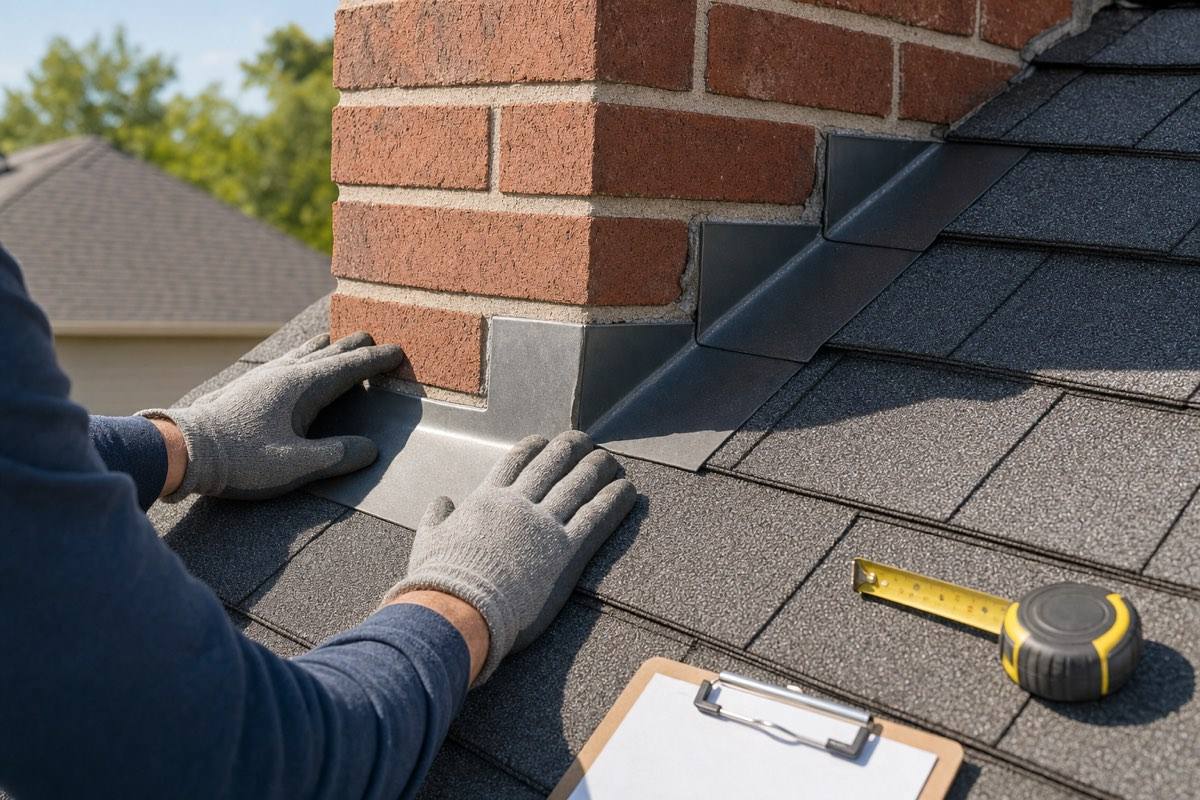
- Flashing failures. The single largest category. Metal transitions at chimneys, sidewalls, headwalls, skylights and valleys that have corroded, lifted, or were face-nailed and caulked instead of properly woven into the shingle courses. On 1970s and 1980s homes across Carrollton and Original Town this is what we find more than anything else.
- Cracked pipe boots. The rubber collar around a plumbing vent hardens and splits under Texas UV in roughly half the life of the shingles. A fifteen year old roof commonly has boots that failed years ago.
- Valley failures. Valleys carry more water than any other part of the roof. Debris dams up behind leaves and twigs and forces water sideways underneath the shingles.
- Ridge and ridge vent damage. A cracked ridge cap or a damaged ridge vent is a direct opening into the attic at the highest point of the house.
- Nail pops and exposed fasteners. Nails that have backed out create a direct path into the decking and indicate the shingles around them have moved.
- Wind-broken shingle seals. Shingles still nailed and still in place, but no longer bonded to the course below, so wind-driven rain gets underneath them.
- Condensation, which is not a leak at all. Poor attic ventilation causes warm moist air to condense on cold decking and drip. It looks exactly like a roof leak and no amount of roof repair will fix it.
Why Water Appears Far From the Entry Point
Water entering at a roof penetration does not fall straight down. It runs along the underside of the decking following the slope, drops onto a rafter, tracks along the rafter horizontally until it hits an obstruction, then finds the path of least resistance through the insulation and the ceiling drywall.
It is entirely normal for water entering at a chimney flashing on one side of a house to appear as a stain in a bedroom on the other. This is why patching above the stain fails so reliably, and why we work uphill from the interior evidence rather than starting on the roof directly above it.
It is also why we ask when the stain appears. A leak that only shows during wind-driven rain from one direction tells us something quite different from one that appears in any rainfall, and a stain that appears on the first cold morning of the year is usually condensation rather than a leak.
How We Find a Leak
Leak tracing is a process of elimination, and it works from the inside out.
| Stage | What we do | What it rules in or out |
|---|---|---|
| Interior assessment | Map the stain, check the attic above it with a moisture meter | Establishes the drop point and whether water is currently active |
| Attic inspection | Look for daylight, water tracks, staining on rafters and sheathing | Traces the path back uphill toward the entry point |
| Ventilation check | Measure intake and exhaust, look for frost or condensation patterns | Rules condensation in or out before anyone touches the roof |
| Roof-side inspection | Examine every detail uphill of the suspected entry area | Identifies the failed component |
| Controlled water testing | Isolate and flood one area at a time from the bottom up | Confirms the source before any repair is quoted |
Controlled water testing is the step most contractors skip. Running water on the whole roof at once tells you nothing. Isolating one detail at a time, starting at the lowest point and working up, is what turns a suspicion into a confirmed diagnosis.
Leaks We See in Lewisville Homes
Lewisville's split housing stock produces two clear patterns. On the 1980s and 1990s established neighborhoods, the leaks concentrate at flashing and boots, and we routinely find flashing that was sealed with caulk rather than properly integrated, plus attic ventilation that never met code. On newer Castle Hills and Vista Ridge construction the shingle field is generally sound and the problems cluster at penetrations and at transitions where a production crew moved quickly.
Across both, the trigger is usually weather. Wind that broke shingle seals during the March 2025 storms, which pushed 80 mph gusts through Denton County, produces leaks that appear weeks or months later during the next sustained rain, long after the homeowner has stopped connecting the two events.
Warning signs
Signs You Have an Active Roof Leak
Some of these are obvious. The ones that are not are the ones that do the most damage.
Brown or yellow rings on a ceiling
The classic sign, and it means water has already saturated the drywall. A ring with a darker center and defined edges is usually an old leak that has dried; one with soft, spreading edges is active.
Musty smell in a room or upstairs hallway
Frequently the first sign, and it can precede any visible staining by months. It means moisture is sitting in insulation or framing where you cannot see it, which is where the expensive damage happens.
Bubbling or peeling paint on a ceiling or upper wall
Moisture behind the paint film lifting it away from the substrate. On a wall rather than a ceiling it often points to a flashing failure at a wall-to-roof transition.
Daylight visible through the decking from the attic
Go up in the middle of a bright day with the lights off. Any pinpoint of daylight is a hole, and anywhere light gets through, water will follow.
Dark staining or water tracks on attic rafters
Look for dark streaks running down or along the timber. These map the water's path and are the single most useful thing for tracing a leak back to its entry point.
Drips that appear only in wind-driven rain
A leak that shows in a storm from one direction but not in ordinary rainfall usually means a lifted shingle seal or a flashing detail that only fails under lateral pressure. These are easy to miss and easy to misdiagnose.
Our process
Our Leak Repair Process
Diagnosis before quoting, always. A quote given before the source is confirmed is a guess.
Map the interior evidence
We assess the stain, check the attic directly above it with a moisture meter, and establish whether water is currently active or the damage is historic.
Rule out condensation
We measure attic ventilation against the code requirement before assuming a roof defect, because condensation on cold decking looks identical to a leak and no roof repair will ever fix it.
Trace and confirm the source
We work uphill from the interior evidence, inspect every detail above it, and where necessary run controlled water testing on one isolated area at a time to confirm the entry point.
Repair and reinstate the water shedding sequence
The failed component comes out, new material goes in, and the layers are reinstated in the correct overlapping order so the repair sheds water the way the roof was designed to.
Why choose us
Why Choose Us for Leak Repair
We Confirm the Source Before We Quote
A quote issued before anyone has confirmed where the water is actually entering is a guess, and it is why so many homeowners pay for the same leak twice. We trace it, and where the evidence is ambiguous we run controlled water testing one isolated detail at a time from the bottom up until we have a confirmed diagnosis rather than a plausible theory.
We Check for Condensation First
A significant share of what gets reported as a roof leak in North Texas is condensation on cold decking caused by attic ventilation that does not meet the code requirement of one square foot of net free area per 150 square feet of attic floor. It drips like a leak and stains like a leak. Replacing shingles will not touch it, and we would rather find that out before you spend the money.
No Roofing Cement Standing In for a Repair
Tar in a tube stops a drip and hides the defect from whoever looks next. It cannot survive the thermal cycling between a 105 degree August afternoon and a February freeze, so it cracks and lets water back in, and it usually has to be cut out before a real repair can be made. We remove failed components and replace them properly.
Our commitments
Why Lewisville Property Owners Trust Us
Free, No Pressure Inspection
Every inspection is free and comes with a written findings report and photographs of what we actually saw on your roof. If the roof has life left in it, we tell you that and we do not quote a replacement.
We Tear Off, We Never Overlay
Laying new shingles over old ones is faster and cheaper, and it is the reason we spend so much time replacing roofs barely a decade old. Overlays trap heat and moisture, conceal rotted decking and add dead load the framing was never designed to carry. Every replacement goes down to bare deck.
Licensed and Fully Insured
Texas does not license roofers at the state level, which is exactly why this matters. Our contractors carry general liability and workers compensation coverage, and we will hand you the certificates before anyone sets a ladder against your house.
We Handle the Insurance Claim
Hail and wind claims turn on documentation. We meet your adjuster on the roof, provide the photo evidence and measurements, and make sure the scope of loss reflects the damage that is actually there.
By city
Roof Leak Repair Near You
Housing stock, roof age and storm exposure change from city to city, and so does this job. Each page below covers what is specific about roof leak repair in that community.
Related Roofing Services
Answers
Roof Leak Questions
How urgent is a small roof leak?
More urgent than it looks. The visible water is a fraction of what is in the structure, and the expensive damage is the wet insulation, the saturated framing and the mold that follows, none of which you can see. A slow leak left through one North Texas summer routinely turns a small repair into a decking and drywall job.
Can you find a leak that only happens sometimes?
Yes, and intermittent leaks are the ones that most reward proper tracing. A leak appearing only in wind-driven rain from a particular direction points to a lifted seal or a flashing detail that fails under lateral pressure. Tell us the conditions when it appears, because that narrows the search considerably before we get on the roof.
Is my leak covered by insurance?
It depends on the cause. Sudden damage from a covered peril such as wind or hail is generally covered. A leak resulting from a roof that has worn out, or from deferred maintenance, generally is not. Resulting interior damage is often covered even where the roof repair itself is not, which surprises people. We document the cause so you know which situation you are in.
Why did my leak come back after another company repaired it?
Almost always because the repair was made above the ceiling stain rather than at the actual entry point. Water travels along decking and rafters before it drops, sometimes a long way. If nobody traced it properly, the patch went on a sound section of roof and the real defect is still there.
Do I need to replace the whole roof because of one leak?
Usually not. A single leak from a failed boot, a lifted flashing or a damaged valley is a repair on an otherwise sound roof. What changes the answer is repeat leaks in different rooms over multiple seasons, which indicates the system is failing generally rather than at one point.
Find the Leak Before It Finds Your Insulation
Free inspection, proper leak tracing, and a written diagnosis rather than a guess and a patch.