Lewisville, TX · Denton County
Emergency Roof Repair in Lewisville, TX
Water coming through the ceiling does not wait for business hours. Our line is answered 24 hours a day, every day, including during active storms.
Emergency roof repair in Lewisville, TX is a phone call, not a web page. That line is answered around the clock, including at 3am and including during active severe weather. Everything below is for after you have made the call.
What Counts as a Roofing Emergency
Not everything needs a 2am response, and we would rather tell you that than bill you for one. These situations do:
- Active water entering the living space. Any visible dripping, running or pooling water inside the house.
- A bulging or sagging ceiling. That is trapped water, and a ceiling that lets go on its own does far more damage than a controlled release.
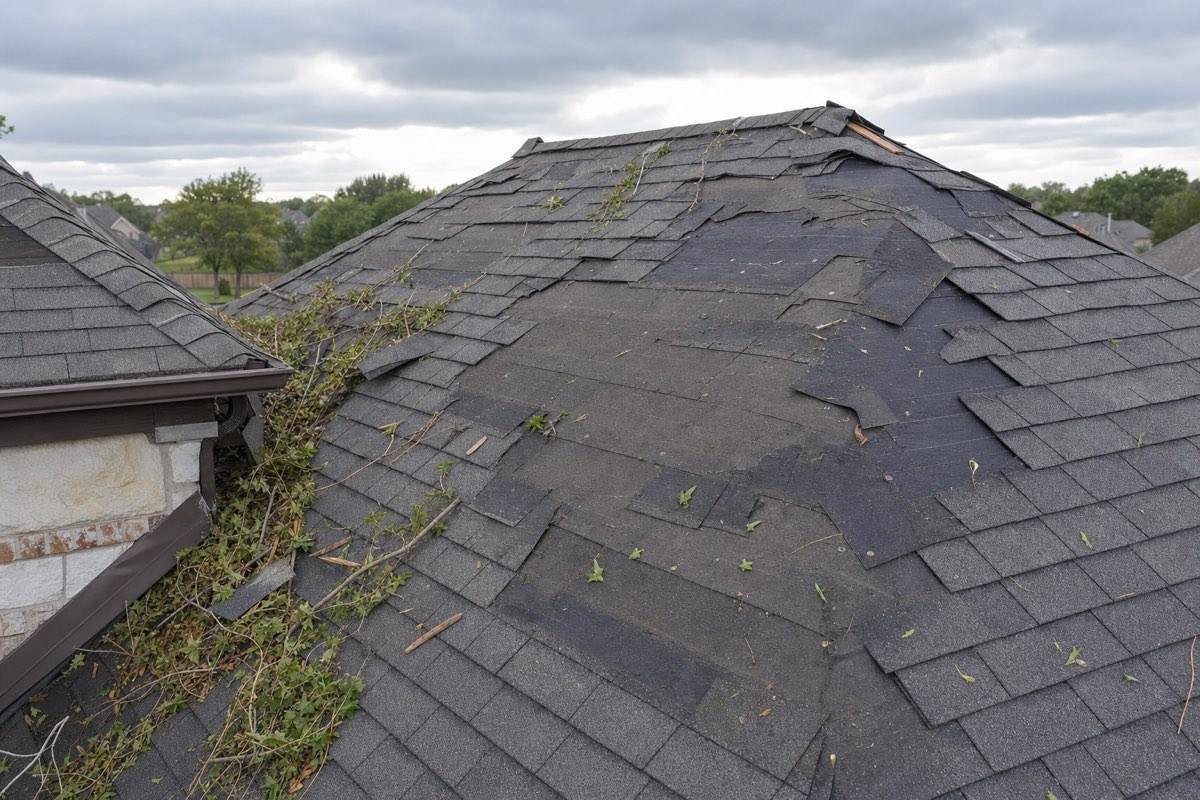
- A tree or large limb on the roof. Potential structural damage, and the load has to be assessed before it is removed.
- Sections of roof covering visibly gone. Exposed decking with more weather coming.
- Water anywhere near electrical. Light fixtures, ceiling fans, outlets or the service panel.
- A puncture through the decking. Wind-borne debris at storm speed goes straight through.
What can generally wait for a normal appointment: a few missing shingles with no water coming in, a stain that has been there for months and is not growing, a slow drip into an unfinished attic with nothing beneath it, and gutter problems. Call anyway and describe it. We will tell you honestly whether it needs tonight or Tuesday.
What to Do in the First Ten Minutes
Before we get there, these steps limit the damage and protect your claim.
- Cut power to the affected area. If water is near any fixture or outlet, switch off that circuit at the breaker panel before going near it. Water travels along framing and reaches wiring well away from the visible stain.
- Move what you can and contain the rest. Furniture, electronics and rugs out of the way, buckets under the drips, towels around the base.
- Relieve a bulging ceiling deliberately. Put a bucket underneath and pierce the lowest point of the bulge with a screwdriver. A controlled release through a small hole is far better than the whole section failing.
- Photograph everything before you clean up. Interior damage, standing water, affected belongings, the ceiling, the walls. Date-stamped photographs are what your adjuster will want and you cannot recreate them later.
- Do not go on the roof. This is the one that matters most. Storm-damaged decking may not hold your weight and wet roofing is one of the more reliable ways to end up in hospital.
How Emergency Tarping Works
An emergency tarp is a temporary but genuinely engineered measure, not a sheet thrown over a hole. Done properly it means a heavy-duty tarp extended well past the damaged area and up over the ridge where possible, fastened along battens rather than punched through with random nails, and weighted or secured so it does not become a sail in the next gust.
It buys the time needed to assess the full damage, get an adjuster out, and schedule a permanent repair, without water continuing to enter the structure in the meantime. On most residential roofs a tarp holds for several weeks. It is not a repair and we will not pretend it is.
Most homeowners policies impose a duty to mitigate further damage after a loss, so tarping is not just practical, it protects your position with the carrier. Keep the invoice, because reasonable mitigation costs are generally recoverable under the claim.
Why the Middle of the Night Matters in North Texas
Severe weather in this region does not distribute evenly through the day. North Texas gets a significant share of its severe thunderstorm activity in the late evening and overnight hours as storm complexes track across the region, which means a great many roof failures begin when every roofing office in Denton County is closed.
The March 2025 storms that pushed 80 mph winds through Denton County and damaged buildings in Lewisville are the kind of event that generates a run of overnight calls. The difference between water entering a house for six hours and water entering it for thirty is frequently the difference between a ceiling repair and a full remediation of insulation, drywall, flooring and framing.
Warning signs
Emergency Situations We Respond To
If you are looking at any of these right now, call rather than reading further.
Water dripping through a ceiling or light fixture
Active intrusion into the living space. Kill the circuit at the panel if it is anywhere near electrical, contain the water, and call. Every hour it continues expands the remediation scope.
A ceiling that is bulging or sagging downward
That is trapped water, and drywall holds a surprising amount before it fails. Release it deliberately with a screwdriver at the low point over a bucket rather than letting the whole section come down.
A tree or large limb resting on the roof
Do not remove it and do not go under it. The limb may be the only thing holding a damaged section in place, and the framing underneath may be compromised. Stay out of that part of the house and call.
Visible decking exposed after wind damage
Shingles and underlayment gone across an area, with bare wood showing. With more weather coming this needs tarping tonight, not an appointment next week.
A puncture through the roof from wind-borne debris
Debris at 80 mph goes through shingles and decking. The hole is usually small and the water volume is not, because it is a direct unobstructed path into the structure.
Sudden water staining spreading across a ceiling
If a stain is visibly growing while you watch it, water is entering faster than the structure can absorb it. This is an active emergency even if nothing is dripping yet.
Our process
What Happens When You Call the Emergency Line
Answered by a person, at any hour, with dispatch decisions made on the call.
A person answers and triages
No phone tree. We ask whether water is entering, whether it is near electrical, whether anyone is at risk, and what caused it. That determines whether you get dispatch tonight or a morning appointment.
Immediate guidance on the phone
Before anyone leaves the depot we walk you through cutting power to the affected circuit, containing the water, and relieving a bulging ceiling safely, so damage stops accumulating while we travel.
Document, stabilize, tarp
On arrival we photograph the damage for your claim, assess whether there is any structural concern, and install a properly fastened emergency tarp to stop further intrusion.
Full inspection and permanent repair scheduled
Once the weather clears we return for a complete inspection, produce the written report for your carrier, and schedule the permanent repair or replacement.
Why choose us
Why Choose Us in an Emergency
24 Hours, Every Day, Including During the Storm
The hours when roofing offices are closed are exactly the hours when North Texas storm complexes move through and roofs start failing. Our line is answered by a person at any hour, and we dispatch during active severe weather rather than waiting for it to pass, because the difference between six hours of water intrusion and thirty is the difference between a ceiling patch and a full remediation.
Equipped to Tarp Safely in the Dark and the Rain
Tarping a wet, storm-damaged roof at night is not something to improvise. Our crews carry fall protection, lighting, battens and heavy-duty tarping material, and they install tarps fastened along battens and carried over the ridge rather than nailed randomly through the covering, which is how a tarp survives the next gust instead of becoming a sail.
We Photograph Before We Cover
A tarp installed before the damage is documented makes the adjuster's job harder and weakens your claim, and it is the single most common mistake we find on roofs another crew reached first. We photograph the full extent of the damage, then cover it, then give you the file. It costs ten minutes and it can be worth thousands.
Our commitments
Why Lewisville Property Owners Trust Us
Free, No Pressure Inspection
Every inspection is free and comes with a written findings report and photographs of what we actually saw on your roof. If the roof has life left in it, we tell you that and we do not quote a replacement.
We Tear Off, We Never Overlay
Laying new shingles over old ones is faster and cheaper, and it is the reason we spend so much time replacing roofs barely a decade old. Overlays trap heat and moisture, conceal rotted decking and add dead load the framing was never designed to carry. Every replacement goes down to bare deck.
Licensed and Fully Insured
Texas does not license roofers at the state level, which is exactly why this matters. Our contractors carry general liability and workers compensation coverage, and we will hand you the certificates before anyone sets a ladder against your house.
We Handle the Insurance Claim
Hail and wind claims turn on documentation. We meet your adjuster on the roof, provide the photo evidence and measurements, and make sure the scope of loss reflects the damage that is actually there.
Related Roofing Services
Answers
Emergency Roof Repair Questions
Do you really answer the phone at 3am?
Yes. A person answers, not a voicemail box or an answering service that takes a message for the morning. If water is entering the building we dispatch. If it can safely wait until daylight we will tell you that honestly rather than charging you for a night call you did not need.
How much does an emergency call-out and tarping cost?
Emergency tarping is priced on the size and complexity of the area and the conditions we are working in. We give you the figure on the phone or on arrival, before any work starts. Keep the invoice, because most policies impose a duty to mitigate further damage and reasonable mitigation costs are generally recoverable under the claim.
How long will an emergency tarp last?
A properly installed tarp typically holds for several weeks, which is normally enough to get an adjuster out and a permanent repair scheduled. It is a temporary measure and we will not describe it as anything else. We monitor tarps we install and will re-secure one if a subsequent storm moves it.
Can you come out during an active storm?
We dispatch during active weather where it is safe to do so, and safety is our call rather than yours, because sending a crew onto a wet roof during lightning is not a risk we will take. If we cannot get on the roof immediately we will tell you, walk you through containing the damage inside, and go up the moment conditions permit.
What if the damage turns out not to be an emergency?
Then we tell you, and you have lost nothing but a phone call. A large share of the calls we take overnight get resolved with advice and a normal appointment the following week. We would much rather talk you down than roll a truck you did not need.
Water Coming In? Call (469) 470-0610 Now
Answered 24 hours a day by a person, every day of the year, including during active storms.